
Greater Manchester
Builders in Rochdale
Rochdale is a metropolitan borough on the north eastern edge of Greater Manchester, set in the valley of the River Roch in the foothills of the South Pennines. Specifically, the borough comprises the towns of Rochdale, Heywood, Middleton, Littleborough, and Milnrow, together with the Pennine villages of Wardle, Smallbridge, Firgrove, and Newhey. Furthermore, Rochdale borough had a population of 223,773 at the 2021 census across an area of 158 square kilometres, and the latest mid-year estimate puts the borough at approximately 235,561 in 2024. As a result, Rochdale operates as one of the most affordable boroughs in Greater Manchester, with a renovation market driven by direct Metrolink access into Manchester city centre, substantial Victorian and Edwardian millworker housing stock, and entry prices that sit materially below most southern and western boroughs.
Renovat Construction delivers building and refurbishment projects across Rochdale for homeowners, landlords, and property investors. Importantly, our PMP certified, RICS accredited team manages every project from initial survey through to final handover, with one point of contact and full accountability throughout.
Planning a renovation, extension, loft conversion, or HMO project in Rochdale? Get a free site visit and a fixed price quote with no obligation.
Get Free Quote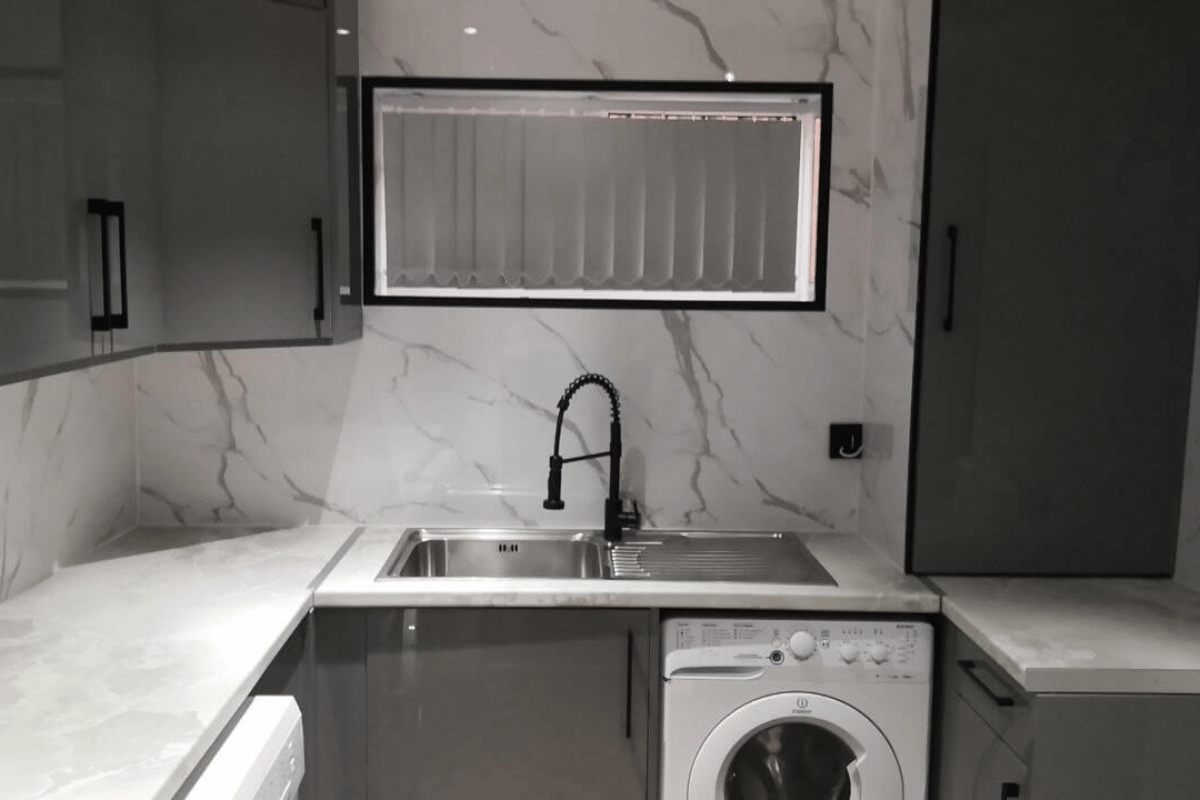
Why Rochdale Renovations Work Differently
Three forces shape every renovation decision in Rochdale, and importantly, they do not apply equally elsewhere in Greater Manchester.
The affordability and yield position
Rochdale entry prices sit among the lowest in Greater Manchester, particularly across central Rochdale, Heywood, and parts of Middleton. As a result, this creates two distinct opportunities for buyers in the borough.
What it means for owner occupiers
For owner occupiers, renovation in Rochdale delivers a finished family home at a total cost well below buying a finished property in higher priced postcodes such as Sale, Altrincham, or Didsbury. Furthermore, the borough's quality housing stock means well chosen properties refurbish to a high specification without losing money against the local resale ceiling.
What it means for investors
By contrast, for investors, the lower entry price tends to deliver stronger gross rental yields than equivalent properties in South Manchester, particularly across the Victorian and Edwardian terraces of central Rochdale, Heywood, and Castleton, and the inter war semis of Norden, Bamford, and Alkrington.
Direct Metrolink and rail access into Manchester
Rochdale benefits from two distinct rapid transit links into Manchester city centre. Specifically, the Metrolink East Didsbury to Rochdale Town Centre service (Pink Line) opened in 2014 and runs from Rochdale Town Centre through Rochdale Railway Station, Newbold, Kingsway Business Park, Milnrow, Newhey, Shaw and Crompton, Derker, and Oldham Mumps into Manchester Victoria and onwards to East Didsbury. Additionally, Rochdale, Castleton, Littleborough, Smithy Bridge, and Mills Hill are served by Northern rail services on the Manchester to Leeds Calder Valley line, with direct trains into Manchester Victoria.
Motorway access
The M62 motorway runs east to west across the borough with junctions at Birch (J18), Pilsworth (J19), Castleton (J20), and Milnrow (J21), and the A627(M) spur connects directly into Rochdale town centre. As a result, this combination of tram, rail, and motorway access supports owner occupier demand from professionals working in central Manchester and rental demand from young professionals priced out of South Manchester.
Industrial heritage and Pennine landscape
Rochdale stretches from densely populated urban areas in the lower valleys to rural moorland and reservoirs in the Pennine uplands. Specifically, the borough is the birthplace of the modern cooperative movement, founded by the Rochdale Pioneers in 1844, and rose to prominence as one of the leading cotton processing towns of the Industrial Revolution. Additionally, Rochdale's Grade I listed Town Hall, completed in 1871, is regularly cited among the finest Gothic Revival civic buildings in England.
Canals, lakes, and protected landscapes
The Rochdale Canal, parts of which are designated as a Site of Special Scientific Interest and a European Special Area of Conservation, threads through the borough on its way from Manchester to West Yorkshire. Consequently, this combination of industrial character, period housing stock, and proximity to Hollingworth Lake, Healey Dell, Blackstone Edge, and the wider South Pennines supports a renovation market that varies significantly between the dense urban grain of central Rochdale, Heywood, and Castleton and the more rural character of Littleborough, Wardle, and Norden.
How Rochdale's Property Mix Shapes Renovation Decisions
The Rochdale borough housing stock reflects multiple development phases from the cotton mill era through to modern infill development. As a result, what counts as a sensible renovation strategy varies significantly between neighbourhoods.
Victorian terraces (1860 to 1910)
Found across central Rochdale, Spotland, Falinge, Healey, Milkstone, Deeplish, central Heywood, central Middleton, Castleton, and parts of Littleborough and Milnrow. Specifically, these properties have solid brick or local stone walls, slate roofs, original timber floors, and many have cellars or partial subfloor voids. Built originally for the cotton mill, dyeing, and engineering workforce. Common renovation work includes full rewiring, replumbing, damp proofing, replastering, and kitchen and bathroom refits. As a result, these terraces continue to deliver some of the strongest rental yields across Greater Manchester at the right purchase price.
Edwardian and inter war semis (1900 to 1939)
Found extensively across Norden, Bamford, Healey, Shawclough, Alkrington, Hopwood, parts of Heywood, and the wider OL11, OL12, OL16, M24, and M25 footprints. Specifically, these properties feature bay windows, generous room sizes, front and rear gardens, and many have hipped roofs suitable for hip to gable loft conversion. Therefore, these are the workhorse family homes of the Rochdale borough, ideal for rear extensions creating open plan kitchen diners and loft conversions for additional bedrooms.
Post war and 1960s housing
Found across parts of Kirkholt, Langley, Darnhill, Kingsway, and Balderstone. Mix of semi detached and short terraces with cavity walls, hipped roofs, and integral or detached garages. Generally, these homes commonly need heating and insulation upgrades to meet current EPC requirements for rental properties.
Detached and rural housing
Concentrated across Norden, Bamford, Littleborough, Smithy Bridge, Wardle, Whitworth Road, and the upper valleys towards Blackstone Edge. Specifically, larger detached homes, stone cottages, and farmhouse conversions backing onto the South Pennine moors and Hollingworth Lake. Additionally, many of these properties have substantial plots supporting significant extensions, outbuildings, and garden studios. Conservation and rural character considerations apply across Birch in Middleton, Milnrow, parts of Littleborough, and other designated conservation areas.
Modern apartments and new build housing
Concentrated around the Rochdale town centre regeneration, Number One Riverside, Kingsway Business Park, the Rochdale Riverside development, and infill schemes across Middleton, Heywood, and Castleton. Generally in good structural condition, although these properties typically benefit from kitchen and bathroom upgrades to maximise rental yield.
Conservation Areas and Heritage Properties in Rochdale
Rochdale Council has designated multiple conservation areas across the borough, each with a conservation area appraisal setting out the historic character of the area. Specifically, the designated conservation areas include Rochdale Town Centre, Birch village in Middleton, two conservation areas in Milnrow around Butterworth Hall, and others across Heywood, Littleborough, and the wider borough. Additionally, Rochdale Council's stated position is that there will generally be very few circumstances where an Article 4 Direction is considered necessary, given the existing controls already provided by conservation area designations themselves.
What conservation area status means for homeowners
Within Rochdale's conservation areas, several controls apply automatically. Specifically, demolition of buildings or boundary walls usually requires planning permission. Furthermore, the extent of permitted development for items such as satellite dishes and smaller extensions is reduced. Additionally, all trees within a conservation area with a stem diameter greater than 75mm are protected, requiring six weeks written notice to Rochdale Council before any felling, lopping, or pruning. As a result, we assess conservation area status and any applicable Article 4 Direction at the quote stage so you know exactly what is possible before committing to a project.
Heritage and conservation approach
Rochdale Council guidance for development within conservation areas recommends professional input from architects and surveyors familiar with historic buildings, and the use of traditional materials. Generally, successful applications use Welsh slate or natural stone for roofing, lime mortar rather than modern cement on period brickwork and stonework, and timber sash or casement windows rather than uPVC. Additionally, we prepare heritage statements as standard for any conservation area, listed building, or Article 4 area project. Therefore, this supports more successful applications and reduces the risk of conditions or refusal.
The full list of Rochdale conservation areas, appraisals, and any Article 4 Directions is published by Rochdale Council Conservation Areas.
HMO Conversions in Rochdale
Rochdale Council does not currently operate a borough wide HMO Article 4 Direction. Specifically, this means that the change of use from a standard family dwelling (Use Class C3) to a small HMO of up to six unrelated occupiers (Use Class C4) generally falls within permitted development rights across most of the borough, including Rochdale, Heywood, Middleton, Littleborough, Milnrow, and the Pennine villages. By contrast, large HMOs of seven or more occupiers (sui generis) always require a full planning application regardless of borough.
Rochdale Council's planning position
Rochdale Council's own published planning position is that Article 4 Directions will only be applied in limited circumstances on a case by case basis through the relevant Township Committee and the Planning and Licensing Committee. Therefore, any future restriction would be introduced through a formal process with public consultation rather than applied retrospectively to existing lawful HMOs.
HMO viability in Rochdale
The absence of a borough wide HMO Article 4 Direction makes Rochdale one of the more accessible boroughs in Greater Manchester for new HMO conversions, particularly when combined with low entry prices and direct Metrolink access. Specifically, investor demand is supported by the Manchester Victoria tram service, the Calder Valley rail line, lower property values than South Manchester, and a young professional and student rental segment.
Licensing requirements for Rochdale HMOs
HMOs of three or four unrelated occupiers may require additional licensing depending on their location and management arrangements, and HMOs of five or more occupiers always require a mandatory HMO licence under the Housing Act 2004. As a result, we manage the full HMO conversion process including any planning application that may be required for the specific property, fire safety compliance to LACORS standards, Building Regulations sign off, and HMO licensing through Rochdale Council.
Project Types We Deliver in Rochdale
Full house renovations. Complete strip out and rebuild including rewiring, replumbing, new heating, plastering, kitchen, bathroom, flooring, and decoration. Particularly suited to the Victorian terraces of central Rochdale, Spotland, Falinge, Castleton, central Heywood, and central Middleton, and the Edwardian semis of Norden, Bamford, Alkrington, and Hopwood.
House extensions. Single storey rear, side, and wraparound extensions. Specifically, the inter war semis across Norden, Bamford, Alkrington, Shawclough, and Hopwood are ideal candidates for rear extensions creating open plan kitchen diners under permitted development.
Loft conversions. Hip to gable with rear dormer on the inter war semi housing stock across the Rochdale borough. Additionally, simple rear dormers on Edwardian properties and full mansard or storey additions on substantial detached homes across Norden, Bamford, Littleborough, and Wardle where conservation area rules permit.
Kitchen and bathroom renovations. Single room upgrades through to full property refits. Rochdale's family housing market is increasingly demanding move in ready specification, particularly across Norden, Bamford, Alkrington, and the more affluent pockets of Littleborough and Milnrow.
HMO conversions. Full feasibility, design, planning applications where required, fire safety, Building Regulations, and licensing for both small (C4) and large (sui generis) HMOs. Specifically, Rochdale's current permitted development position for small HMOs makes it one of the more accessible boroughs for new conversions, subject to property suitability and any local planning policies.
Garage and cellar conversions. Inter war semis across Norden, Bamford, Alkrington, and Hopwood commonly have integral or detached garages suitable for habitable conversion. Additionally, central Rochdale, Heywood, and Castleton's older Victorian terraces often have cellars suitable for proper tanking and conversion under BS 8102:2022.
New build infill homes. Single plot self builds and small developments on infill sites across the borough.
Painting, decorating, and landscaping. Internal and external decoration, garden design, fencing, driveways, and paving.
Frequently Asked Questions
Investment, value, and renovation strategy
Is Rochdale a good area for property investment in 2026?
Yes, for the right strategy. Specifically, Rochdale entry prices remain among the lowest in Greater Manchester, which continues to support strong gross rental yields on single let properties and HMOs. Additionally, the Metrolink Pink Line from Rochdale Town Centre to Manchester Victoria and onwards to East Didsbury, combined with direct Northern rail services on the Calder Valley line, underpin sustained tenant demand. Furthermore, the absence of a borough wide HMO Article 4 Direction means that small HMO conversions of up to six occupiers can often proceed under permitted development, subject to property suitability and local planning policy. Therefore, well structured HMO and single let conversions in central Rochdale, Heywood, Castleton, and Middleton can deliver strong returns relative to comparable South Manchester locations.
Should I renovate or move in Rochdale?
For most owner occupiers in the Rochdale borough, renovation often makes more financial sense than moving up the property ladder within the same area. Specifically, stamp duty, agent fees, survey costs, and removal expenses on a typical family home purchase add up substantially. Furthermore, comprehensive renovation typically delivers more bespoke results for a comparable spend while preserving school catchment, neighbours, and established outdoor space. By contrast, the exception is when the underlying plot or layout is fundamentally wrong for what you need. In these cases, moving is usually the better answer. Therefore, we provide an honest feasibility assessment rather than recommending work that does not make economic sense.
What is the difference between renovating in Rochdale, Heywood, and Middleton?
All three sit within the same Rochdale Council planning regime and share similar property archetypes including Victorian terraces, Edwardian semis, and inter war housing. However, the property values, demographic profile, and transport positioning differ. Specifically, central Rochdale benefits from the Metrolink Pink Line terminus, Rochdale Railway Station, and the Rochdale Town Centre conservation area. By contrast, Middleton sits closer to Manchester city centre and the M60, with direct access via the A664 Rochdale Road and the Mills Hill railway station. Heywood lies between the two, served by the M66 and M62, with strong family housing demand. As a result, the same renovation budget delivers different outcomes across these three areas, and we adjust the specification to match the local resale or rental ceiling.
Planning, conservation areas, and HMOs
Do I need planning permission for an HMO in Rochdale?
It depends on the size and location. Specifically, Rochdale Council does not currently operate a borough wide HMO Article 4 Direction. Therefore, the change of use from a standard family dwelling (C3) to a small HMO of up to six unrelated occupiers (C4) generally falls within permitted development across the borough, including Rochdale, Heywood, Middleton, Littleborough, and Milnrow. By contrast, large HMOs of seven or more occupiers (sui generis) always require a full planning application regardless of borough. Additionally, properties within conservation areas have reduced permitted development rights, and any specific Article 4 Direction that has been applied to a particular street or building will require a planning application. Therefore, we check planning status property by property at the quote stage.
Can I extend my Rochdale home without planning permission?
In many cases yes, under permitted development rights. Specifically, a single storey rear extension of up to 6 metres on a semi detached house, or 8 metres on a detached house, can typically be built without full planning permission subject to height and design conditions. However, properties within Rochdale's conservation areas have reduced permitted development rights, and properties within any applicable Article 4 Direction area have additional restrictions on window replacements, roof materials, and render applications. Therefore, we assess permitted development eligibility at the quote stage and handle any planning, conservation area, or listed building applications needed.
How do Rochdale's conservation areas affect renovation work?
Rochdale Council has designated multiple conservation areas across the borough, including Rochdale Town Centre, Birch village in Middleton, two conservation areas in Milnrow around Butterworth Hall, and others in Heywood, Littleborough, and the Pennine villages. Specifically, demolition of buildings or boundary walls within a Rochdale conservation area usually requires planning permission. Additionally, the extent of permitted development for satellite dishes and smaller extensions is reduced. All trees with a stem diameter greater than 75mm are also protected, requiring six weeks written notice before felling, lopping, or pruning. Furthermore, certain conservation areas may have an Article 4 Direction applied to specific streets or properties, removing further permitted development rights for residential alterations. Generally, successful applications use traditional materials including Welsh slate, natural stone, lime mortar, and timber sash windows.
How long does a loft conversion take in Rochdale?
A typical hip to gable loft conversion with rear dormer on an inter war Rochdale semi takes approximately 8 to 12 weeks from start to finish, including Building Regulations inspections. Specifically, simple rear dormers on Edwardian properties can be completed in 6 to 10 weeks. By contrast, larger conversions on substantial detached homes across Norden, Bamford, or Littleborough take longer due to roof complexity, structural considerations, and higher specification requirements. We give you a realistic programme at the start and update you weekly throughout the project.
Costs, coverage, and project management
How much does a house renovation cost in Rochdale?
Costs vary significantly based on property type, specification, and scope. Specifically, a light cosmetic refresh on a Rochdale terrace typically starts from around £25,000. A full renovation of an inter war Norden, Bamford, or Alkrington semi can range from £55,000 to £110,000. Additionally, comprehensive renovation of a substantial detached home across Littleborough, Wardle, or Norden with high specification finishes can reach £180,000 or more. We provide a fixed price quote broken down by trade so you see exactly where every pound is going before any work starts. Request a free quote for an accurate figure on your specific property.
Do you cover all of Rochdale?
Yes. Specifically, we work across every Rochdale neighbourhood including central Rochdale, Spotland, Falinge, Healey, Shawclough, Norden, Bamford, Castleton, Kingsway, Kirkholt, Balderstone, Milkstone, Deeplish, Heywood, Hopwood, Darnhill, Middleton, Alkrington, Langley, Rhodes, Littleborough, Smithy Bridge, Wardle, Milnrow, Newhey, Firgrove, Smallbridge, and the wider OL10, OL11, OL12, OL15, OL16, M24, and M25 postcodes. Additionally, we cover all neighbouring areas. If you are unsure whether we cover your postcode, call 0161 706 0480 and we will confirm straight away.
Do you handle planning applications and Building Regulations in Rochdale?
Yes. Specifically, for any project requiring planning permission or Building Regulations approval, including HMO planning applications where required, conservation area consents, listed building consents, and extensions beyond permitted development, we manage the full process on your behalf. This includes preparing and submitting applications, liaising with Rochdale Council Planning, and ensuring all work is signed off correctly at completion.
Areas We Cover in Rochdale
Central Rochdale, Spotland, Falinge, Healey, Shawclough, Norden, Bamford, Castleton, Kingsway, Kirkholt, Balderstone, Milkstone, Deeplish, Heywood, Hopwood, Darnhill, Middleton, Alkrington, Langley, Rhodes, Littleborough, Smithy Bridge, Wardle, Milnrow, Newhey, Firgrove, Smallbridge, and the wider OL10, OL11, OL12, OL15, OL16, M24, and M25 postcodes.
Additionally, for projects across the wider region see our pages for Manchester, Salford, Bolton, Stockport, Trafford, Altrincham, Sale, Bury, and Tameside.
Planning a renovation, extension, HMO conversion, or refurbishment in Rochdale? Get an honest feasibility assessment and a fixed price quote with no obligation.
Get Free Quote