
Greater Manchester
Builders in Bury
Bury is a market town on the River Irwell in the Metropolitan Borough of Bury, Greater Manchester. Specifically, the town had a population of 81,101 at the 2021 census, with the wider borough population of 193,846. Furthermore, Bury sits roughly 10 miles north of Manchester city centre, with direct Metrolink connectivity into Manchester Victoria. As a result, Bury operates as one of the more affordable commuter and family belt locations in Greater Manchester, with a renovation market driven by the value differential against South Manchester, ongoing town centre regeneration, and substantial period housing stock that responds well to investment.
Renovat Construction delivers building and refurbishment projects across Bury for homeowners, landlords, and property investors. Importantly, our PMP certified, RICS accredited team manages every project from initial survey through to final handover, with one point of contact and full accountability throughout.
Why Bury Renovations Work Differently
Three forces shape every renovation decision in Bury, and importantly, they don't apply equally elsewhere in Greater Manchester.
The Manchester value differential
Bury entry prices sit materially below comparable Trafford and Stockport postcodes. Specifically, a Victorian terrace, Edwardian semi, or inter war family home in Bury typically sells at a noticeable discount to equivalent stock in Sale, Stockport, or Altrincham. As a result, this creates two distinct opportunities. For owner occupiers, renovation in Bury delivers a finished family home at a total cost below buying a finished property in higher priced postcodes. By contrast, for investors, the lower entry price tends to deliver stronger gross rental yields than equivalent properties in South Manchester.
Direct Metrolink to Manchester Victoria
Bury Interchange sits at the northern terminus of the Metrolink Bury Line, which opened on 6 April 1992 as the first Metrolink line to enter service. Specifically, the Bury Line runs from Bury Interchange to Manchester Victoria via Radcliffe, Whitefield, Prestwich, Heaton Park, Bowker Vale, and Crumpsall, with services running every 15 minutes throughout the day. Furthermore, the typical journey from Bury to Manchester Victoria takes approximately 29 minutes, with through services to Manchester Piccadilly via the Yellow Line. As a result, this commuter access supports both owner occupier demand from professionals working in central Manchester and rental demand from young professionals priced out of South Manchester.
Town centre regeneration and the East Lancashire Railway
Bury town centre has seen substantial public realm investment over recent years. Specifically, the historic Bury Market remains one of the most visited markets in the North West, supporting town centre footfall and surrounding hospitality. Additionally, Bury Bolton Street station serves as the main hub of the East Lancashire Railway, a 12.5 mile heritage railway running through Summerseat and Ramsbottom to Rawtenstall, drawing tourism into the town. Furthermore, the Manchester, Bolton and Bury Canal corridor and the Irwell Valley provide green space and walking routes through the borough. Consequently, this combination of market town character, heritage assets, and Manchester connectivity supports a renovation market increasingly focused on quality family housing rather than purely investor stock.
How Bury's Property Mix Shapes Renovation Decisions
The Bury borough housing stock reflects multiple development phases from the cotton mill era through to modern infill development. As a result, what counts as a sensible renovation strategy varies significantly between neighbourhoods.
Victorian terraces (1860 to 1910). Found across Bury town centre, Walmersley Road corridor, Heap Bridge, and parts of Radcliffe. Specifically, these properties have solid brick walls, slate roofs, original timber floors, and many have cellars. Built originally for the cotton mill workforce. Common renovation work includes full rewiring, replumbing, damp proofing, replastering, and kitchen and bathroom refits. As a result, these terraces offer some of the strongest rental yields in north Greater Manchester at the right purchase price.
Edwardian and inter war semis (1900 to 1939). Found extensively across Whitefield, Prestwich, Tottington, Greenmount, and the wider M25 and BL8 footprint. Specifically, these properties feature bay windows, generous room sizes, front and rear gardens, and many have hipped roofs suitable for hip to gable loft conversion. Additionally, Whitefield and Prestwich in particular benefit from direct Metrolink access via the Bury Line. Therefore, these are the workhorse family homes of the Bury borough, ideal for rear extensions creating open plan kitchen diners.
Post war and 1960s housing. Found across parts of Radcliffe, Unsworth, and Bury East. Mix of semi detached and short terraces with cavity walls, hipped roofs, and integral or detached garages. Generally, these homes commonly need heating and insulation upgrades to meet current EPC requirements for rental properties.
Detached and rural housing. Concentrated across Tottington, Greenmount, Hawkshaw, Holcombe Brook, Ainsworth, and Affetside. Specifically, larger detached homes, stone cottages, and properties backing onto the West Pennine Moors. Additionally, many of these properties have substantial plots supporting significant extensions, outbuildings, and garden studios. Conservation and rural character considerations apply in parts of Tottington and Holcombe.
Modern apartments and new build housing. Concentrated around Bury town centre regeneration and infill developments. Generally in good structural condition, although these properties typically benefit from kitchen and bathroom upgrades and layout improvements to maximise rental yield.
Conservation Areas and Heritage Properties in Bury
Bury Council has designated multiple conservation areas across the borough, with conservation area appraisals and management plans setting out the historic character of each. Specifically, Bury Council can apply Article 4 Directions to individual properties or wider areas within conservation areas to remove specified permitted development rights. Additionally, Article 4 Directions in Bury apply to single family dwelling houses (not flats, apartments, or boarding houses) and can be used to require planning permission for external alterations that would otherwise fall under permitted development.
What conservation area status means for homeowners
Within Bury's conservation areas, several controls apply automatically. Specifically, demolition of buildings or boundary walls usually requires conservation area consent. Furthermore, the extent of permitted development for items such as satellite dishes and smaller extensions is reduced. Additionally, all trees within a conservation area with a stem diameter greater than 75mm are protected, requiring six weeks written notice to Bury Council before any felling, lopping, or pruning. As a result, we assess conservation area status at the quote stage so you know what's possible before committing to a project.
Heritage and conservation approach
Bury Council guidance for development within conservation areas specifically recommends seeking professional advice from an architect or building surveyor and using builders skilled in working in historic areas. Generally, successful applications use traditional materials. These include Welsh slate or natural clay tile for roofing, lime mortar rather than modern cement on period brickwork, and timber sash or casement windows rather than uPVC. Additionally, we prepare heritage statements as standard for any conservation area or listed building project. Therefore, this supports more successful applications and reduces the risk of conditions or refusal.
The full list of Bury conservation areas, appraisals, and Article 4 Directions is published by Bury Council Conservation.
HMO Conversions in Bury
Bury Council does not currently operate a borough wide HMO Article 4 Direction. Specifically, this means that conversion of a standard family dwelling (Use Class C3) to a small HMO of up to six unrelated occupiers (Use Class C4) generally falls under permitted development rights, except where conservation area Article 4 controls apply, where the property already has restrictive planning conditions, or where existing planning history removes permitted development. By contrast, large HMOs of seven or more occupiers (sui generis) always require a full planning application regardless of borough.
HMO viability in Bury
Bury has growing HMO demand driven by the Metrolink commuter market into Manchester Victoria, lower entry prices than South Manchester, and a young professional rental segment. Specifically, Victorian terraces close to Bury town centre and the Metrolink stations across Whitefield and Prestwich offer viable HMO entry points. However, every investor should verify current planning history on each specific property and account for the possibility of a future borough wide HMO Article 4 Direction. As a result, we manage the full HMO conversion process including feasibility assessment, design, fire safety compliance to LACORS standards, Building Regulations sign off, and HMO licensing.
Project Types We Deliver in Bury
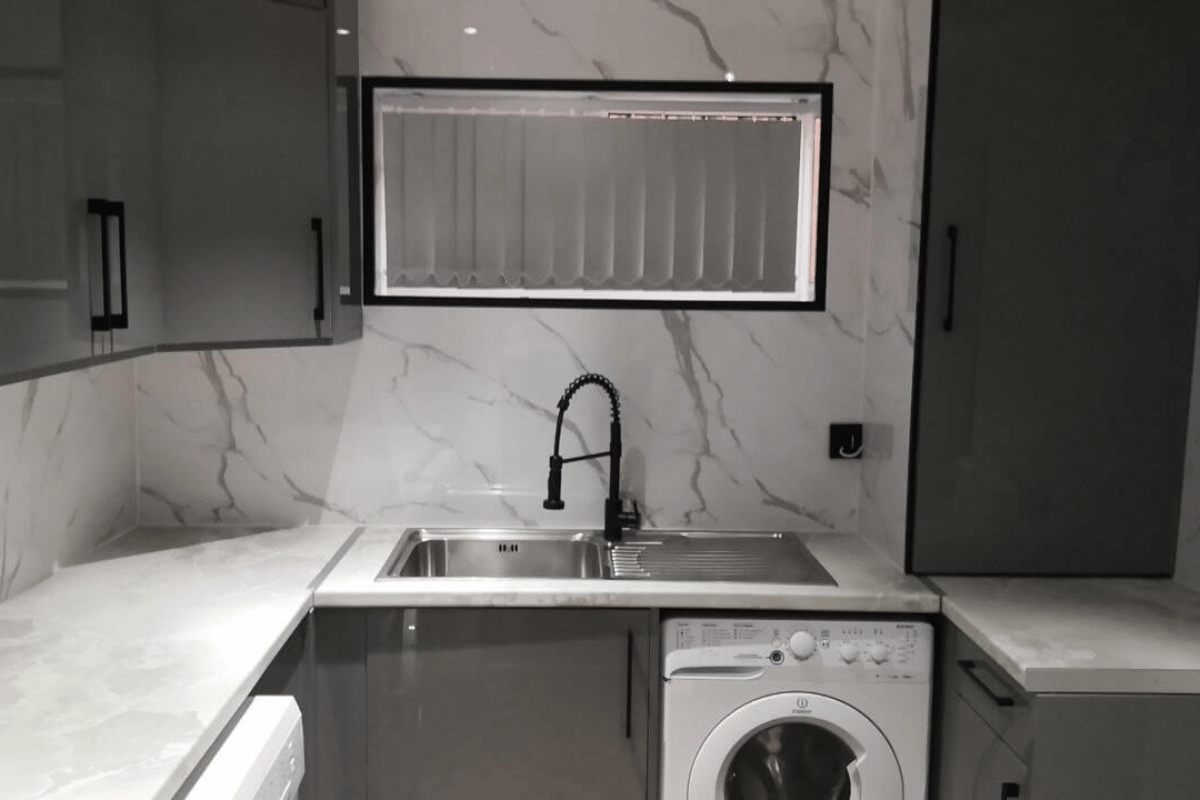
Full house renovations. Complete strip out and rebuild including rewiring, replumbing, new heating, plastering, kitchen, bathroom, flooring, and decoration. Particularly suited to the Victorian terraces of central Bury and the inter war semis of Whitefield, Prestwich, Tottington, and Greenmount.
House extensions. Single storey rear, side, and wraparound extensions. Specifically, the inter war semis across Whitefield, Prestwich, Tottington, and Unsworth are ideal candidates for rear extensions creating open plan kitchen diners under permitted development.
Loft conversions. Hip to gable with rear dormer on the inter war semi housing stock across the Bury borough. Additionally, simple rear dormers on Edwardian properties and full mansard or storey additions on substantial detached homes where conservation area rules permit.
Kitchen and bathroom renovations. Single room upgrades through to full property refits. Bury's family housing market is increasingly demanding move in ready specification, particularly across Whitefield, Prestwich, and Tottington.
HMO conversions. Full feasibility, design, planning where required, fire safety, Building Regulations, and licensing for both small (C4) and large (sui generis) HMOs. Specifically, we verify current planning history on each property to confirm whether a planning application is required.
Garage and cellar conversions. Inter war semis across the Bury borough commonly have integral or detached garages suitable for habitable conversion. Additionally, central Bury's older Victorian terraces often have cellars suitable for proper tanking and conversion.
New build infill homes. Single plot self builds and small developments on infill sites across the borough.
Painting, decorating, and landscaping. Internal and external decoration, garden design, fencing, driveways, and paving.
Frequently Asked Questions
Investment, value, and renovation strategy
Is Bury a good area for property investment and renovation?
Yes, for the right strategy. Specifically, Bury entry prices sit materially below comparable Trafford and Stockport postcodes, which delivers stronger gross rental yields and lower total renovation costs against finished property prices in South Manchester. Additionally, the direct Metrolink connection to Manchester Victoria (approximately 29 minutes) supports sustained tenant demand from professionals priced out of central Manchester. Furthermore, Bury Council does not currently operate a borough wide HMO Article 4 Direction, which gives investors more flexibility on small HMO conversion than in neighbouring Manchester or Trafford. Therefore, both Victorian terrace single lets and HMO conversions in central Bury, Whitefield, and Prestwich tend to deliver competitive returns.
Should I renovate or move in Bury?
For most owner occupiers in the Bury borough, renovation often makes more financial sense than moving up the property ladder within the same area. Specifically, stamp duty, agent fees, survey costs, and removal expenses on a typical family home purchase add up substantially. Furthermore, comprehensive renovation typically delivers more bespoke results for a comparable spend while preserving school catchment, neighbours, and established outdoor space. By contrast, the exception is when the underlying plot or layout is fundamentally wrong for what you need. In these cases, moving is usually the better answer. Therefore, we provide an honest feasibility assessment rather than recommending work that doesn't make economic sense.
What's the difference between renovating in Bury, Whitefield, and Prestwich?
All three sit within the same Bury Council planning regime and share similar property archetypes including Victorian terraces, Edwardian semis, and inter war housing. However, the property values, demographic profile, and Metrolink positioning differ. Specifically, Whitefield and Prestwich sit closer to Manchester city centre on the Bury Line and command higher prices and a higher specification baseline than central Bury. By contrast, central Bury offers stronger entry yields and town centre amenity. Furthermore, Whitefield and Prestwich have established Jewish community infrastructure, which influences the local housing market. As a result, the same renovation budget delivers different outcomes across these three areas.
Planning, conservation areas, and HMOs
Do I need planning permission for an HMO in Bury?
Currently, conversion of a standard dwelling (C3) to a small HMO of up to six unrelated occupiers (C4) generally falls under permitted development rights in Bury. Specifically, Bury Council does not yet operate a borough wide HMO Article 4 Direction (unlike Manchester or Trafford). However, full planning permission is always required for large HMOs of seven or more occupiers (sui generis), where conservation area Article 4 Directions apply, and where existing planning conditions or planning history remove permitted development on a specific property. Therefore, we verify current planning history on each property at the feasibility stage before confirming whether a planning application is required.
Can I extend my Bury home without planning permission?
In many cases yes, under permitted development rights. Specifically, a single storey rear extension of up to 6 metres on a semi detached house, or 8 metres on a detached house, can typically be built without full planning permission subject to height and design conditions. However, properties in Bury conservation areas with Article 4 Directions have reduced permitted development rights. Specifically, Article 4 Directions in Bury can require planning permission for window replacements, render and roof material changes, porches, fences, and other external alterations within affected areas. Therefore, we assess permitted development eligibility at the quote stage and handle any planning, conservation area, or listed building applications needed.
How do Bury's conservation areas affect renovation work?
Bury Council has designated multiple conservation areas across the borough, with conservation area appraisals and management plans setting out the historic character of each. Specifically, demolition of buildings or boundary walls within a Bury conservation area usually requires conservation area consent. Additionally, the extent of permitted development for items such as satellite dishes and smaller extensions is reduced. All trees with a stem diameter greater than 75mm are also protected, requiring six weeks written notice before felling, lopping, or pruning. Furthermore, Bury Council can apply Article 4 Directions to individual properties or wider areas to require planning permission for external alterations. Generally, successful applications use traditional materials including Welsh slate, lime mortar, and timber sash windows.
How long does a loft conversion take in Bury?
A typical hip to gable loft conversion with rear dormer on an inter war Bury semi takes approximately 8 to 12 weeks from start to finish, including Building Regulations inspections. Specifically, simple rear dormers on Edwardian properties can be completed in 6 to 10 weeks. By contrast, larger conversions on substantial detached homes across Tottington, Greenmount, or Holcombe Brook take longer due to roof complexity, structural considerations, and higher specification requirements. We give you a realistic programme at the start and update you weekly throughout the project.
Costs, coverage, and project management
How much does a house renovation cost in Bury?
Costs vary significantly based on property type, specification, and scope. Specifically, a light cosmetic refresh on a Bury terrace typically starts from around £25,000. A full renovation of an inter war Whitefield, Prestwich, or Tottington semi can range from £60,000 to £120,000. Additionally, comprehensive renovation of a substantial detached home across Greenmount, Holcombe Brook, or Hawkshaw with high specification finishes can reach £200,000 or more. We provide a fixed price quote broken down by trade so you see exactly where every pound is going before any work starts. Request a free quote for an accurate figure on your specific property.
Do you cover all of Bury?
Yes. Specifically, we work across every Bury neighbourhood including Bury town centre, Walmersley, Heap Bridge, Radcliffe, Whitefield, Prestwich, Tottington, Greenmount, Holcombe Brook, Hawkshaw, Ainsworth, Affetside, Unsworth, and the wider BL8, BL9, M25, M26, and M45 postcodes. Additionally, we cover all neighbouring areas. If you are unsure whether we cover your postcode, call 0161 706 0480 and we will confirm straight away.
Do you handle planning applications and Building Regulations in Bury?
Yes. Specifically, for any project requiring planning permission or Building Regulations approval, including HMO planning where required, conservation area consents, listed building consents, and extensions beyond permitted development, we manage the full process on your behalf. This includes preparing and submitting applications, liaising with Bury Council Planning, and ensuring all work is signed off correctly at completion.
Areas We Cover in Bury
Bury town centre, Walmersley, Heap Bridge, Radcliffe, Whitefield, Prestwich, Tottington, Greenmount, Holcombe Brook, Hawkshaw, Ainsworth, Affetside, Unsworth, and the wider BL8, BL9, M25, M26, and M45 postcodes.
Additionally, for projects across the wider region see our pages for Manchester, Salford, Bolton, Stockport, Trafford, and Altrincham.
Planning a renovation, extension, or refurbishment in Bury? Get an honest feasibility assessment and a fixed price quote with no obligation.
Get Free Quote