
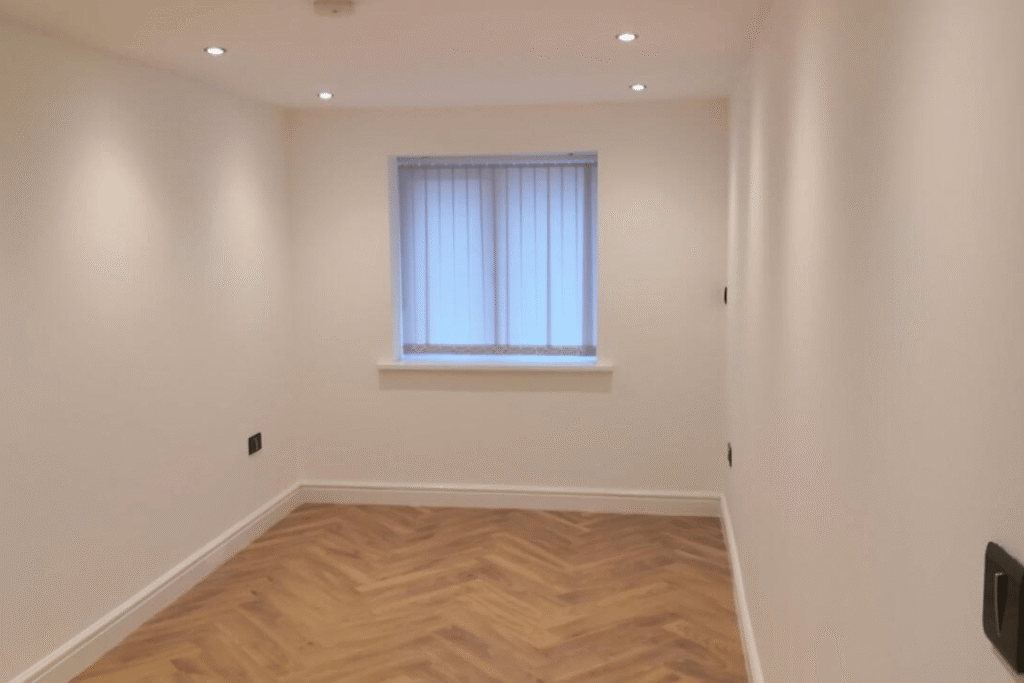
A garage conversion is one of the most cost effective ways to add living space to your home in Manchester or Greater Manchester. If your garage is used for storage or sitting empty, converting it into a bedroom, home office, gym, or playroom could add real value to your property without the cost and disruption of a full house extension. In this guide, we break down garage conversion costs across Manchester, Stockport, Salford, Bolton, Trafford, Altrincham, Sale, Bury, Tameside, and Rochdale so you can budget accurately before work begins.
Garage Conversion Cost in Manchester: What to Expect
The cost of a garage conversion in Greater Manchester depends on the size of the garage, what you want to use the space for, and the current condition of the structure. As a result, prices vary from one project to the next.
A garage conversion in Manchester in 2026 typically costs between £5,000 and £20,000. A basic single garage conversion with insulation, plastering, flooring, electrics, and decoration sits at the lower end. A high specification conversion with an ensuite bathroom, underfloor heating, or a kitchenette pushes towards the upper end.
For a standard single integral garage (approximately 15 to 18 square metres), most homeowners in Greater Manchester should expect to pay between £8,000 and £15,000 for a well finished room.
Garage Conversion Cost Breakdown
Here is a breakdown of the individual costs you can expect for a garage conversion in Manchester in 2026:
Garage door removal and new wall: £1,200 to £2,500. The existing garage door is removed and replaced with a new brick or block wall with a window. This is the biggest visual change and creates a proper insulated wall. In some cases, homeowners choose to keep the garage door opening and fit bi-fold or French doors instead, which costs slightly more but creates a strong connection to the driveway or garden.
Insulation: £800 to £2,000. Garages are not built to habitable room standards, so walls, floor, and ceiling all need insulating to meet current Building Regulations. Rigid insulation boards on the walls and floor are the most common approach. Because of this, the room will feel warm and comfortable year round rather than cold and draughty like a typical garage.
Damp proof membrane: £500 to £1,200. Most garage floors sit directly on concrete with no damp proofing. A damp proof membrane is laid before the insulation and screed to prevent moisture coming up through the floor.
Floor levelling and screeding: £800 to £1,500. Garage floors are often lower than the rest of the house and may slope towards the garage door. A new screed levels the floor and brings it up to the same height as the adjoining rooms. In addition, insulation boards are laid under the screed to meet thermal standards.
Electrics: £800 to £2,000. A garage conversion needs its own lighting circuit, sockets, and a connection to the main consumer unit. All electrical work must comply with Building Regulations Part P. If you are adding an ensuite or kitchenette, additional circuits and an extractor fan will be needed.
Plastering: £800 to £1,500. Walls are either plastered directly onto the insulation or dry lined with plasterboard on a timber frame. The ceiling is typically plasterboarded and skimmed to match the rest of the house.
Flooring: £500 to £2,000. Laminate, vinyl, engineered wood, and carpet are all suitable for garage conversions. For example, vinyl or laminate are practical choices for a home office or gym, while carpet works well for a bedroom.
Window installation: £400 to £1,200. If a window is being added in the new front wall, this is included in the wall build cost. However, if additional windows are needed on side walls, each one costs between £400 and £800 including the lintel and making good.
Heating: £400 to £1,000. Options include extending the existing central heating system with a new radiator (the most common choice), installing electric panel heaters, or fitting underfloor heating under the new screed. Extending the central heating is usually the most cost effective option.
Plastering and decoration: £500 to £1,200. Mist coat on new plaster followed by two coats of emulsion on walls and ceilings, plus woodwork painted. This gives the room a clean, finished look that matches the rest of the house.
Internal doorway: £300 to £800. Creating an opening from the house into the new room typically involves removing a section of the wall between the garage and the adjoining room. If the wall is load bearing, a steel lintel is required, which increases the cost.
Skip hire and waste removal: £200 to £400. Removing the old garage door, rubble from floor work, and general construction waste.
What Affects Garage Conversion Costs in Manchester?
Type of Garage
An integral garage (built into the house) is the cheapest to convert because it already shares walls with the rest of the property and has a roof. An attached garage (joined to the side of the house) costs slightly more because the connecting wall may need opening up. A detached garage is the most expensive to convert because it needs more insulation, a separate heating system, and potentially its own electrical supply.
Size
A single garage (approximately 15 to 18 square metres) costs less than a double garage (approximately 30 to 36 square metres). However, the cost per square metre is often lower for a double garage because many of the fixed costs (new wall, electrics, heating connection) are the same regardless of size.
Current Condition
A garage in good structural condition with a solid roof, dry walls, and a level floor is straightforward to convert. In contrast, a garage with a leaking roof, cracked walls, or a sloping floor will need repairs before the conversion work can begin, adding to the overall cost.
Intended Use
A simple bedroom or home office is the cheapest conversion because it only needs insulation, plastering, electrics, flooring, and decoration. Adding an ensuite bathroom increases costs by £3,000 to £6,000 due to the additional plumbing, tiling, and fixtures. A kitchenette adds £2,000 to £5,000 for plumbing, worktops, and appliances.
Location Within Greater Manchester
Labour costs are broadly consistent across Greater Manchester. However, properties in areas like Altrincham, Hale, and parts of South Manchester may attract slightly higher quotes than equivalent projects in Bolton, Bury, or Rochdale.
Does a Garage Conversion Need Planning Permission in Manchester?
In most cases, no. Converting an existing garage into a habitable room is generally classed as a change of use and falls under permitted development rights, meaning you do not need planning permission.
However, you will need planning permission if the conversion significantly alters the external appearance of the property, if the property is listed or in a conservation area, or if there are specific conditions attached to your property’s planning history (for example, a condition requiring the garage to remain as parking).
All garage conversions require Building Regulations approval. This covers structural safety, fire safety, insulation, ventilation, damp proofing, drainage, and electrical safety. Your builder should arrange Building Control inspections at key stages of the work.
It is also worth applying for a Lawful Development Certificate (LDC) from your local council (£274 for a proposed use, half the full householder application fee). This provides formal proof that the conversion is lawful, which is valuable when you come to sell the property.
Does a Garage Conversion Add Value in Manchester?
Yes. A well executed garage conversion typically adds between 10% and 15% to a property’s value. With the average property price in Manchester at around £250,000 in 2026, a garage conversion costing £8,000 to £15,000 could add £25,000 to £37,500 in value. As a result, it offers one of the highest returns on investment of any home improvement project.
For landlords across Greater Manchester, a garage conversion can add an extra bedroom to a rental property, increasing rental yield. For property investors, it adds a saleable room at a fraction of the cost of a house extension.
The only consideration is parking. In areas where on street parking is easy, losing a garage makes no difference. In areas where parking is limited, buyers may see the loss of a garage as a negative. In most parts of Greater Manchester, the extra living space is worth more than the garage.
How Long Does a Garage Conversion Take?
A straightforward single garage conversion typically takes 3 to 4 weeks from start to completion. This makes it one of the fastest home improvement projects you can undertake.
If the conversion includes an ensuite bathroom, add 1 to 2 weeks for the plumbing and tiling. If significant structural work is needed (for example, opening up a load bearing wall between the garage and the house), add another 1 week for the steel installation and making good.
Popular Uses for Garage Conversions in 2026
Home office: With remote and hybrid working now standard, a dedicated home office with good insulation and lighting is one of the most popular conversion choices in Greater Manchester.
Extra bedroom: Adding a ground floor bedroom is ideal for growing families, elderly relatives who cannot use stairs, or rental properties where an extra bedroom increases yield.
Home gym: A garage provides enough space for weights, a treadmill, and a yoga area. Good insulation and ventilation make it comfortable year round.
Playroom: Families with young children use garage conversions to create a dedicated play space that keeps the mess out of the main living areas.
Annexe: A self contained annexe with a kitchenette and ensuite can provide independent living space for a family member or generate rental income.
How to Save Money on Your Garage Conversion
Keep it simple. A room with insulation, plastering, electrics, flooring, and decoration is far cheaper than one with plumbing. Consider whether you truly need an ensuite or kitchenette.
Use the existing structure. If the garage roof, walls, and floor are in reasonable condition, you save significantly on repairs and structural work.
Match the house. Extending the existing central heating is cheaper than installing a separate heating system. Using the same flooring and finishes as the rest of the house keeps material costs down.
Get multiple quotes. Always compare at least three detailed quotes from experienced builders. Make sure each quote covers the same scope of work so you can compare like for like.
Ready to Convert Your Garage in Manchester?
Whether you are a homeowner looking for more space, a landlord adding a bedroom to a rental property, or a property investor maximising value before a sale, a garage conversion delivers strong returns for a relatively low investment.
At Renovat Construction, we deliver garage conversions, full property refurbishments, kitchen renovations, and house extensions across Manchester, Stockport, Salford, Bolton, Trafford, Altrincham, Sale, Bury, Tameside, and Rochdale.
For more information about what work requires planning approval, see our guide to planning permission in Manchester. For full house renovation costs, see our guide to renovating a terraced house in Bolton. If your property is in Stockport, see our dedicated guide to garage conversions in Stockport.
Get your free, no obligation quote today.
📞 0161 7060 480 📧 contact@renovat.co.uk 🌐 renovat.co.uk