
Renovation Guides
Are Cellar Conversions Worth It? A Plain Guide to Damp, Tanking, and Cost
If you have an old cellar sitting empty under your stairs, you have probably wondered whether it could become a proper room. This guide gives you the honest answer. By the end, you will know whether your cellar is a good candidate, what the damp and tanking work really involves, what it costs in 2026, and how to judge whether the numbers make sense, all before you talk to a single builder.
- A cellar conversion is usually worth it when you already have decent ceiling height, manageable damp, a real need for the space, and plans to stay a while.
- It is often not worth it if the floor must be dug out for headroom, the cellar has serious water problems, or a simpler extension would cost less.
- Converting an existing cellar typically runs from around £1,200 to £2,250 per square metre in 2026, with most usable fit outs landing roughly £25,000 to £60,000.
- Waterproofing is the decision that makes or breaks the whole project, and it should always be designed to the British Standard BS 8102:2022.
- Most existing cellar conversions fall under permitted development, but building control approval is always required.
- Cellar conversion vs basement conversion
- Is your cellar a good candidate? Four checks
- What cellar conversions cost in 2026
- Damp and tanking, the part that decides everything
- Does a cellar conversion add value?
- Do you need planning permission?
- So, is it worth it? The honest summary
- Frequently asked questions
Let us be straight from the start: a cellar conversion is a brilliant move for some homes and a money pit for others. The difference comes down to a few specific things about your cellar, and you can work out which camp you are in yourself. Here is how.
First, Know What Kind of Project You Actually Have
People say "cellar conversion" and "basement conversion" as if they mean the same thing. They do not, and the cost difference between them runs into tens of thousands of pounds. Getting clear on this is the single most useful thing you can do early on.
A cellar conversion means upgrading an underground space that already exists. Most Victorian and Edwardian terraces across Manchester, Salford, Bolton, and the surrounding boroughs have one, built originally for coal. The walls, floor, and ceiling are already there, so the work is about making the space dry, light, and warm enough to live in.
A basement conversion sometimes means the same thing, but the word is also used for digging out a brand new underground level, or excavating a cellar floor to gain extra ceiling height. That involves underpinning, structural work, and hauling out large amounts of soil. It is a far bigger and more expensive job.
Converting an existing cellar that already has decent headroom is the project most likely to be worth it. Digging down for height, or excavating a new basement, only pays off in high value areas where space is scarce and prices are high.
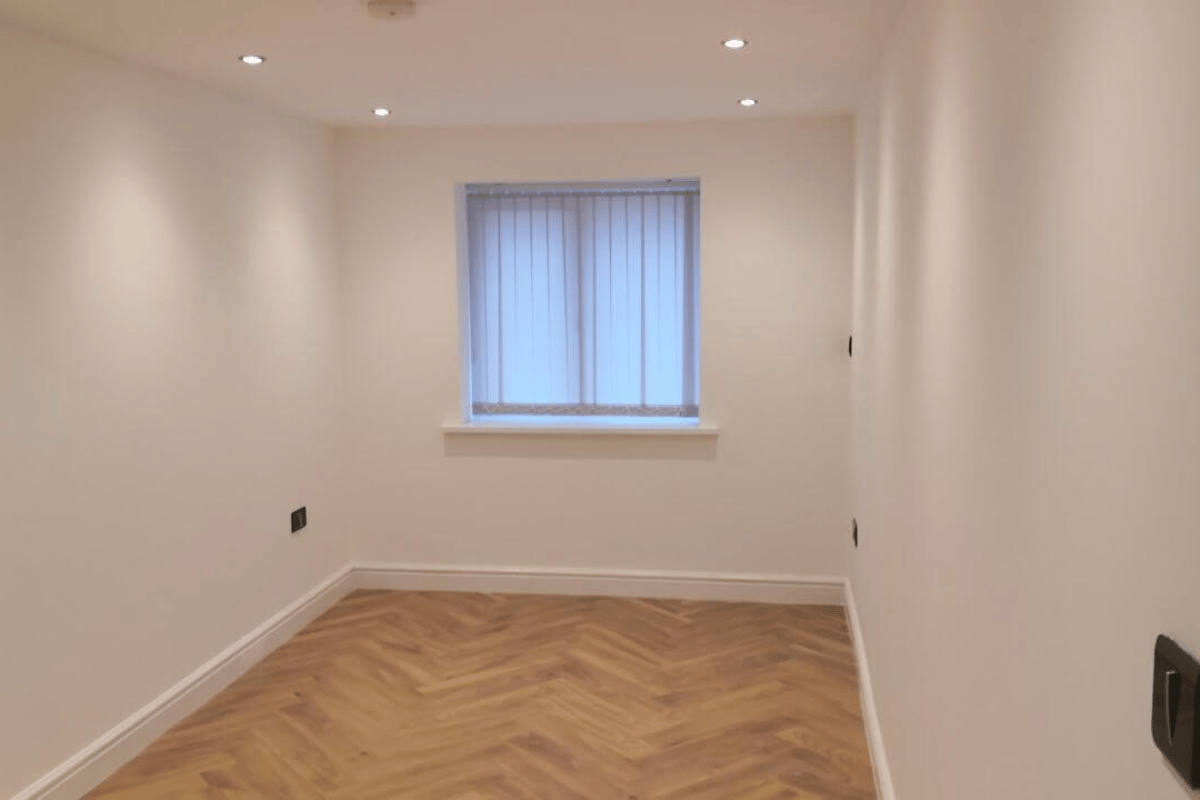
Is Your Cellar a Good Candidate? Check These Four Things
Before cost even enters the picture, run your cellar through this quick checklist. It will tell you most of what you need to know.
1. Headroom
Building Regulations do not set a single fixed minimum ceiling height for a converted room, but a space that feels comfortable to live in generally wants around 2.1 metres or more. If you already have close to that, you avoid the most expensive part of the whole job, which is digging the floor down. If your cellar is a low crawl space, the cost climbs steeply.
2. How wet it is
Ordinary damp, the cold, slightly musty feel of an old cellar, is completely normal and is exactly what waterproofing is designed to solve. It does not rule anything out. What you want to look for is worse than that: visible running water, puddles after heavy rain, or signs of past flooding. That points to a bigger water problem that needs proper investigation first.
3. Whether you actually need the space
A cellar conversion makes most sense when you genuinely have nowhere else to expand, no room for a rear extension and no spare bedroom to repurpose. If you could add the same space more cheaply with a garage conversion or a single storey extension, those are usually worth comparing first.
4. How long you plan to stay
A conversion adds value, but that value is best enjoyed when you live in the space rather than rushing to sell. If you are moving within a year or two, the spend may not have paid for itself yet.
Decent headroom, manageable damp, a real need for the room, and a plan to stay a while. Tick most of those and a cellar conversion is very likely worth it. Miss several and it probably is not.
What Cellar Conversions Cost in 2026
Here are realistic 2026 figures so you can sanity check any quote you are given. These are budgeting ranges, not a price for your home, because every cellar is genuinely different.
| Type of project | Typical 2026 cost | When it applies |
|---|---|---|
| Fit out of an existing cellar | Around £1,200 to £2,250 per m², roughly £25,000 to £60,000 for a usable room | Cellar already has reasonable headroom and manageable damp |
| Conversion with structural work | Around £75,000, rising to about £100,000 with underpinning | Floor lowered for headroom, or structure reinforced |
| Excavating a new basement | Around £140,000 and up | Digging a new underground level from scratch, rarely worth it locally |
| Waterproofing alone | Around £100 to £120 per m² | Part of every project, not a standalone job |
The costs people forget to budget for
On top of the build, set aside money for a structural engineer (roughly £1,000 to £1,500), building control approval (from around £750), a party wall agreement if you share a wall with a neighbour (from around £700), and possible planning fees. These are not optional extras. They are part of doing the job to standard.
Not sure which row of that table your cellar falls into? The honest answer depends on your headroom, damp risk, and access, which is hard to judge from photos alone. We will come and look, tell you which category you are in, and give you a fixed price quote with no obligation and no pressure.
Book a Free Site VisitDamp and Tanking: The Part That Decides Everything
If you remember one thing from this guide, make it this. A cellar conversion lives or dies on its waterproofing. Get it right and the room stays dry and useful for decades. Get it wrong and you have spent tens of thousands turning a dry cellar into a damp, mouldy room you cannot use. So it is worth understanding the basics, even if someone else does the work.
Why cellars get damp
An underground room is surrounded by soil that holds moisture, and water naturally works its way through brick and mortar over time. Older Manchester cellars often have no damp proof course, soft crumbling mortar, and sometimes just a bare earth or basic concrete floor. This is normal and fixable. It is only the more serious water problems, active ingress and flooding, that need solving before any conversion goes ahead.
The two ways to waterproof a cellar
There are two main approaches, and the right one depends entirely on your cellar.
| Method | How it works | Best for |
|---|---|---|
| Tanking (cementitious) | A waterproof slurry or membrane applied directly to walls and floor to hold water back | Cellars with mild, predictable damp; the more affordable option |
| Cavity drainage membrane | A studded membrane channels any water into a perimeter drain and sump pump that removes it | Cellars with a higher or less predictable water risk; more robust, costs more |
The standard to look for
Proper basement waterproofing in the UK is designed to BS 8102:2022, the British Standard for protecting below ground structures from water. A conversion done to this standard weighs up the water risk, the level of dryness the room needs, and the right mix of measures, often more than one for peace of mind. One useful warning sign for you as a homeowner: be wary of any quote that looks suspiciously cheap. Genuine, regulation compliant waterproofing cannot be done for a couple of thousand pounds, and skimping here is the most common reason conversions go wrong.
Does a Cellar Conversion Actually Add Value?
Yes, in the right conditions, and this is often what tips the decision from "nice idea" to "worth doing".
Research has suggested that bringing underused space like a cellar into use can lift a property's value by a meaningful margin, with figures around 15 to 20 percent cited in some studies. But that uplift only shows up when the finished room genuinely feels like proper living space. A bright, dry, well ventilated room that flows naturally from the floor above adds real value. A dark, low, slightly damp box adds very little, however much it cost to build.
So the things that drive the value are practical: ceiling height, natural light (a lightwell makes a huge difference), how dry and warm it feels, and how well it joins onto the rest of the house. In areas where adding space any other way is difficult, a good cellar conversion can return more than it costs. Where cheaper ways to extend exist, the maths is tighter and worth checking carefully.
Do You Need Planning Permission?
For most people, converting an existing cellar into a habitable room counts as a change of use and falls under permitted development, so full planning permission is often not needed. There are some important exceptions to watch for though. If your home is in a conservation area or is listed, the rules tighten and consent may be required. If you excavate to lower the floor and gain headroom, that is treated like an extension and may need permission. Adding a lightwell or new external access can also trigger a planning requirement.
One thing that is never optional: building control approval is always required, because the work has to meet standards for structure, fire escape, ventilation, damp, and electrics. It is there to keep the finished room safe and legal.
So, Is It Worth It? The Honest Summary
A cellar conversion is worth it when you have an existing cellar with reasonable headroom, damp that is manageable rather than severe, a genuine need for the extra room, and plans to stay long enough to enjoy it. In that situation it is often cheaper and less disruptive than extending, and it adds real value to your home.
It is not worth it when it needs expensive excavation just to stand up in, when there is a serious water problem, or when a simpler extension or garage conversion would give you the same space for less money.
The only way to know for certain which one is true for your home is to have someone look at the actual space: the headroom, the damp, the access, and the structure. Photos and guides like this one get you most of the way, but the final answer is on site.
Want a straight answer about your cellar? We will assess the headroom, damp risk, and structure in person, then tell you honestly whether it is worth converting. If it is not the right move, we will say so and point you to a better option. Either way you get a fixed price quote with no obligation.
Get Your Free QuoteFrequently Asked Questions
Is a cellar conversion cheaper than an extension?
It can be, but not always. Converting an existing cellar with reasonable headroom is often more cost effective per square metre than a traditional extension, because the structure is already there and you are not building outward or losing garden space. However, if your cellar needs excavation for headroom or underpinning for structural reasons, the cost rises sharply and an extension may work out cheaper for the same usable space. The honest comparison depends on the condition of your specific cellar.
How do I know if my cellar is too damp to convert?
Ordinary damp, the cold and slightly musty feel of an old cellar, is normal and is exactly what waterproofing is designed to deal with, so it does not rule out a conversion. What needs proper investigation is active water: visible running water, standing water after rain, or signs of regular flooding. That points to a higher water risk that should be designed for, usually with a cavity drainage system rather than basic tanking. A damp and water risk assessment before any work begins is the safe way to find out.
What is the difference between tanking and a cavity drainage membrane?
Tanking applies a waterproof barrier directly to the walls and floor to hold water out, and suits cellars with mild, predictable damp. A cavity drainage membrane takes a different approach: it lets water reach a studded membrane behind the finished wall, then channels it into a perimeter drain and a sump pump that removes it. Cavity drainage is more robust where the water risk is higher, though it costs more because of the drainage and pump. The right system is chosen for your cellar's conditions and designed to BS 8102:2022.
Will a cellar conversion add value to my home?
In the right conditions, yes. Bringing underused space such as a cellar into use can lift a property's value by a meaningful margin, with figures around 15 to 20 percent cited in some research. The key is that the finished room feels like genuine living space: dry, warm, well ventilated, with decent ceiling height and ideally some natural light. A dark, low, damp room adds far less. How well the conversion is done matters more to the final value than simply the fact that it happened.
Do I need planning permission to convert my cellar?
Converting an existing cellar into a habitable room usually falls under permitted development and often does not need full planning permission. Exceptions apply if your home is in a conservation area or is listed, if you excavate to lower the floor and gain headroom (which is treated like an extension), or if you add a lightwell or external access. Building control approval is always required regardless of planning, because the work must meet standards for structure, fire safety, ventilation, damp, and electrics.
How long does a cellar conversion take?
A straightforward fit out of an existing cellar with good headroom typically takes around 6 to 10 weeks, covering waterproofing, electrics, plumbing, insulation, and finishes. Projects involving structural work such as lowering the floor, underpinning, or adding a lightwell take considerably longer and are more disruptive, often requiring you to move out temporarily while spoil is removed. A realistic programme should be agreed at the start, with weekly updates throughout.